
A few years ago, I joined a project where two teams were building the same system. One team was in Europe, the other in the US. Both were full of brilliant developers and both worked hard.
After six months, they had two completely different versions of the product. You may ask why?
Not because of bad code, not because of missing skills. It’s because nobody had made sure the two teams were talking in the same language, literally and figuratively.
For example one team called the concept a “Contract”, while the other called it an “Agreement.” Everyone thought they were building the same thing… until they weren’t.
That project ended with rewrites, frustration and a painful delay. All because of one missing skill Communication.
There was a time when a single brilliant programmer could build an entire system alone. Those times are gone.
The old stereotype of the “basement hacker”, a genius coder who can’t talk to people but produces magic in front of a screen belongs to history. Today’s systems are too complex. Products are too big. Deadlines are too aggressive. No one person can do it alone anymore.
Modern software is built by teams of teams. And when projects scale, the ability of those teams to work together becomes the make-or-break factor.
So what’s the single most important skill in IT today? It’s not Java. It’s not Python. It’s not AI. It’s communication.
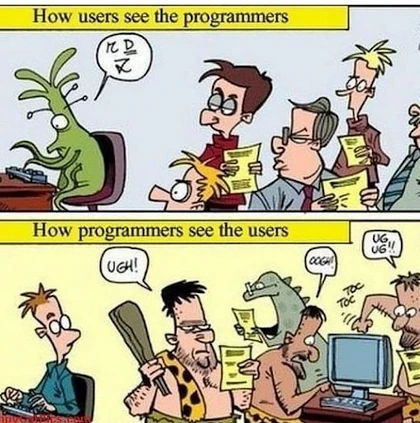
Beyond communication: the power to inspire
Let’s be honest. Every company would love to hire a “10x engineer”, that mythical genius who sees elegant architectures and groundbreaking solutions before anyone else.
But here’s the hard truth:
A genius who cannot communicate their ideas is almost useless in a modern organization.
Why? Because their brilliance stays locked inside their own head. You don’t need lone wolves anymore. You need multipliers. The real value of a great engineer is not only in creating smart ideas, but in infecting others with them.
- Taking a complex architecture and simplifying it so junior developers can actually build it.
- Explaining trade-offs in plain language so product managers can make the right call.
- Inspiring teammates so they feel ownership of the solution, not just blind execution.
If you can’t transfer your ideas, your genius doesn’t scale. If you can inspire others, your ideas spread and grow, far beyond what you could do alone.
Why communication beats raw brilliance
You can have the best ideas in the world, but if you can’t communicate them to others, they won’t matter. You simply cannot implement everything on your own. To stay competitive and get to market fast, your team has to align, understand, and move together.
This is why entire frameworks have emerged with communication at their core:
- Domain-Driven Design (DDD) — more than a coding approach, it’s a way to build shared understanding of the business domain so knowledge isn’t scattered across random pieces of code.
- Scaling frameworks like SAFe, LeSS, or Scrum of Scrums — all built to solve one thing: how groups of teams can work effectively together.
- Team Topologies — a guide to structuring teams and interactions, designed to maximize collaboration and minimize communication overload.
As you may see the common thread is not the syntax or tools. It’s about how we talk, align and transfer knowledge.
The hidden superpower of great engineers
The best developers I’ve worked with aren’t just strong coders. They are translators. They take complex technical ideas and explain them in ways that teammates, product managers and even non-tech stakeholders can grasp.
That’s the hidden superpower of modern engineers:
Not just writing code, but making sure the right knowledge flows across the team at the right time.
So, what should we hire for?
When building teams today, we need to stop looking only at technical brilliance. Of course, technical skill matters, but it’s the entry ticket, not the winning card.
The real differentiator is communication:
- Can this person explain their thinking clearly?
- Can they listen and adapt?
- Can they inspire others?
- Can they collaborate across team boundaries?
Because in 2025, the code is important, but the conversation is critical.